
STORIES, ARTICLES, & NEWS ABOUT ACT 181
Letter to Chittenden County & Lamoille State Reps

Dear Representative,
I am writing to you today as a constituent and a landowner, a business owner, and a farmer who is deeply concerned about the future of our state. I am calling for the full repeal of Act 181 (2024) and a fundamental overhaul of Act 250 to exempt families and small businesses trying to make a living on their own land.
Currently, these laws do not protect Vermont; they cripple the very people who steward its landscape or landowners Specifically:
- The "Road Rule" is a Financial Barrier: Requiring an Act 250 permit for a driveway longer than 800 feet (effective July 1, 2026) is an attack on rural families. In our part of the state, 800 feet is an ordinary distance to reach a homesite. Forcing a family to spend tens of thousands of dollars on state-level permitting just to build a single home or a small shop for a business is an infringement on our property rights.
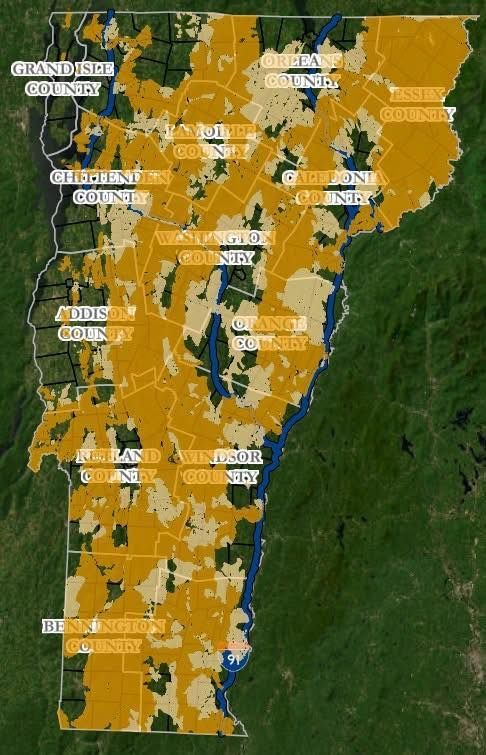
- Tier 3 Mapping is a "Regulatory Taking": The new Tier 3 designations for headwaters and "habitat connectors" are being drawn by planners in Montpelier without local input. This effectively "locks up" private land, destroying its resale value and preventing us from building housing for our children or expanding our small businesses.
- Crippling Small Business Diversification: For small businesses and farms to survive today, they must diversify. Act 181 makes it nearly impossible to add a farm-stay, a processing shed, or a small workshop without triggering a bureaucratic maze that most of us cannot afford.
Act 181 was designed to push everyone into high-density "Tier 1" centers, but many of our towns lack the sewer and water infrastructure to ever qualify. This leaves rural Vermonters with all the restrictions and none of the benefits.
I urge you to support House and Senate efforts to repeal the Road Rule and Tier 3 designations immediately. We do not need a "delay" until 2030; we need a permanent exemption for families and small-scale developments that are the backbone of our rural economy.
Also… The money being collected from Act 250 and Act 181 is being used to build a permanent bureaucracy of full-time board members and planners. Instead of that money going toward infrastructure for our small towns, it is being spent on mapping and enforcement that makes it harder for regular Vermonters to live on their own land.
The "Historical Catch-22": How Act 250 is Killing Small-Scale Farm Stays
I am currently attempting to restore a historic brick house for use as a farm stay—a project intended to help our family farm stay financially viable. Despite this being a pre-existing building, we have been forced into the Act 250 process, which has created an impossible and expensive stalemate between two state-mandated authorities:
- The Historic Preservation Conflict (Criterion 8): Under Act 250’s historic review, the state requires us to maintain the original architecture, specifically the original staircase, to preserve the building’s historical integrity.
- The Commercial Code Conflict: Simultaneously, because Act 250 classifies a farm stay as a "commercial" development, we are held to modern commercial building codes. Our contractors have made it clear: to meet these safety codes, the original staircase must be ripped out and replaced.
- The Result: I am being ordered by one branch of the state to keep the stairs and by another branch to destroy them.
This is a "regulatory deadlock" that costs me time and money I do not have. Act 250 was supposed to protect Vermont’s character, but instead, it is forcing me to choose between violating state historical standards or violating state safety codes. For a family trying to diversify their land to survive, this level of bureaucracy isn't "protection"—it's a barrier to entry that only large developers with unlimited legal budgets can overcome.
The "Dual-Income Trap": Why Families Can’t Win Under Act 181
Beyond the physical stalemate of the renovation, I am being crushed by the financial and jurisdictional requirements of Act 181. To make this project viable and support my family, I need to maximize the building’s income by using it for both traditional farm stays and short-term rentals (Airbnb) when we aren't hosting farm guests.
However, the state has created a system where I am penalized for this self-sufficiency:
Forced into Act 250: Because I am using my land for 'commercial' purposes (STR/Agritourism), I am denied the simple residential exemptions that would allow me to restore this house affordably. Instead, I am forced into a full Act 250 review, which treats my family project with the same level of scrutiny as a corporate hotel.
Targeted by New Taxes:
Under Act 181, if I use this building as an STR, I am hit with a 3% surcharge on top of existing rooms taxes, and potentially a much higher non-homestead property tax rate (which is projected to jump significantly by 2029).
The Infrastructure Barrier:
Act 181’s 'Tier' system funnels all support to downtown 'Tier 1' hubs. As a rural landowner, I receive none of the tax credits or infrastructure grants available to big developers in Burlington or Montpelier, yet I am expected to meet the same high-cost commercial safety and historical codes.
The state claims Act 181 is about 'housing,' but by making it impossible for a farm family to renovate an existing building for dual income, you are actually destroying the economic diversity that keeps rural Vermont alive. We are trying to work our land so we don't have to sell it to a developer, yet the state’s own regulations are the biggest threat to our survival.
share this
MORE READING MATERIAL
Related Articles
STAY UP TO DATE
sign up to our newsletter
Receive bi-weekly updates about the latest news about Act 181
Contact Us